

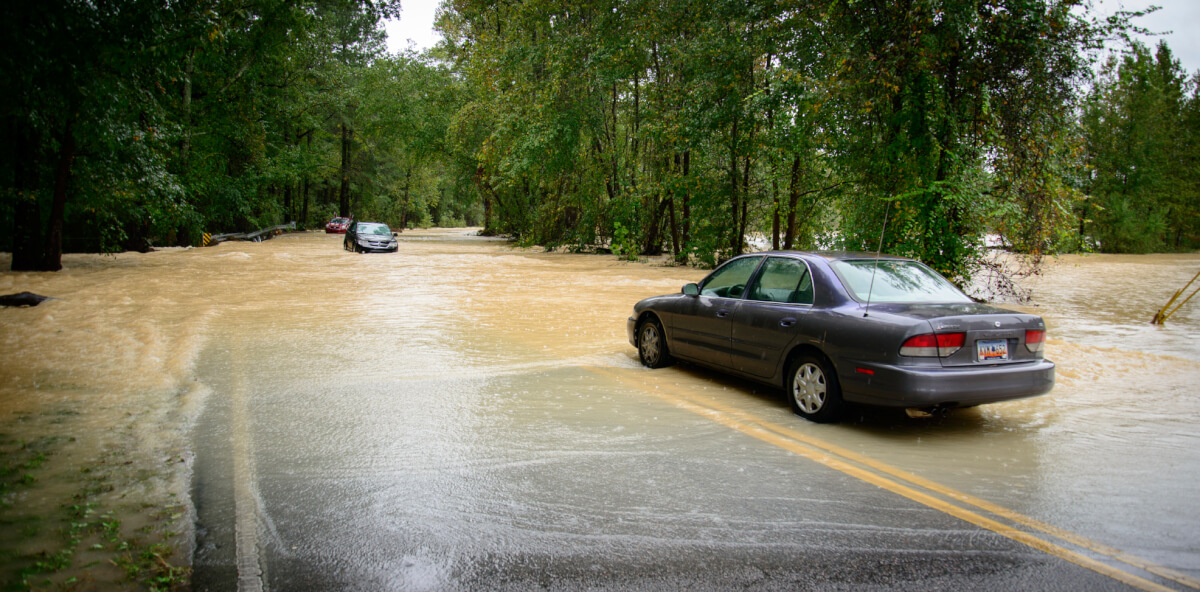
Flooding can disrupt a business faster than many owners expect — and the risk isn’t limited to coastal areas. In 2024 alone, the U.S. experienced 27 weather and climate disasters that each caused at least $1 billion in damage. That year’s billion-dollar events included flooding and multiple tropical cyclones, emphasizing how often water-related losses show up in major disasters.
Commercial flood insurance coverage is often missing where it’s needed most. The Congressional Budget Office reported that the National Flood Insurance Program (NFIP) covers about 3.1 million properties, and that the most at-risk properties didn’t have NFIP coverage.
For small businesses, water damage to your building, lost inventory and cleanup expenses can be costly, and temporarily closing your doors makes it even harder to reopen quickly. And because water-related damage isn’t confined to one type of event or location, flooding can impact businesses in nearly any part of the country.
Flooding Can Occur Anywhere
Flooding can happen far from the coastline and it often happens from rainfall, not storm surge. The National Oceanic and Atmospheric Administration’s (NOAA) archive of billion‑dollar weather and climate disasters shows the U.S. experienced 403 events from 1980 to 2024 where damages reached at least $1 billion, with total costs exceeding $2.915 trillion.
What that means for business owners: floods can stem from heavy rain, rising rivers, flash flooding or overtopped drainage systems, sometimes with little warning. Taking proactive steps ahead of time can reduce damage so you can reopen faster.
How To Protect Your Small Business
That’s why it’s important to take advance measures to prevent or reduce the damage a flood can cause. This is especially important if your business is in a 100‑year or 500‑year flood zone — terms used to describe areas with a higher annual likelihood of flooding. Use the Flood Map Service Center offered by the Federal Emergency Management Agency (FEMA) to check if your business location is in a flood zone.
These preventive actions can help protect your business, property and employees from the perils of a flood.
Have a Business Continuity Plan
A business continuity plan is a strategy for recovering your business in the event of a natural disaster or other emergency. An effective business continuity plan builds upon four key steps:
- Identify your risks or threats.
- Identify your critical business functions and the processes and resources required to support them. This may include things like answering the phones, running key equipment and distributing your product or service.
- Adopt controls to prevent an event or reduce its impact and severity. For example, you might keep copies of all paper and digital files in an off-site location or maintain critical equipment at a higher elevation such as the second floor of your building.
- Test and improve your plan routinely, and train your employees on their roles in executing the plan.
Purchase Flood Insurance
Most standard business insurance policies do not cover flood damage and the loss of income that can result. In other words, even if your business has a good insurance policy, a flood could wash everything away. However, you can purchase flood insurance via your insurance professional through the National Flood Insurance Program (NFIP). NFIP offers up to $500,000 of protection for your commercial building and $500,000 for contents. If you’re in a lower‑risk area, you may qualify for lower‑cost flood coverage options.
It’s important to note that NFIP offers coverage for business property only; it does not provide protection for loss of income if your business is closed for a period of time following a flood. This can be a serious concern for small business owners who do not have large reserves set aside for unexpected downtime. If this is a concern for you, excess flood insurance may also be available for properties valued above the NFIP limits to which business interruption coverage may be added.
Prepare Your Property
Basements are vulnerable to flooding because water can flow down into them and seep through walls when the surrounding ground is saturated. If your business has a basement, these measures can help reduce the damage a flood can cause:
- Inspect your basement for evidence of water entry. Caulk any cracks on interior walls, extend downspouts and re-grade the landscape so water runs away from the building.
- Install a sump pump to protect against seeping groundwater or minor floods. A battery-powered model will operate even when the power is out.
- If water is a recurring problem, apply a waterproof sealant to foundation cracks, framing joints and the floor. For a longer-lasting remedy, you may need to install a drainage system and a waterproof membrane around the perimeter of the foundation.
- Move valuable equipment, papers and inventory to a safer location, such as a second floor or attic.
To reduce the risk of health and environment damage:
- Anchor your fuel tanks. Unanchored tanks can float away and release fuel during a flood.
- Install sewer backflow valves to prevent sewage from backing up into your building.
- If your business uses well water, a licensed well drilling contractor can advise on ways to protect the well from contamination.
Flooding is a common challenge many businesses face. By taking proactive measures and insuring your business against the risk of flood, you can minimize potential damage a flood can cause — and help ensure that your business prevails.